
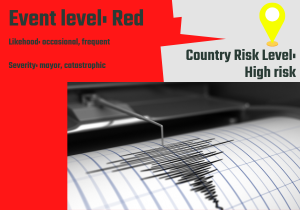
El Global Disaster Alert and Coordination System (GDACS), organismo encargado de monitorear y coordinar la respuesta a desastres globales, ha emitido una alerta roja ante un terremoto de 6.8 de intensidad que ha afectado a Marruecos. Esta alerta se fundamenta en el alto impacto humanitario que se espera debido a la magnitud del sismo y la gran cantidad de población afectada.
El epicentro del terremoto se ubicó a 71 kilómetros de la ciudad de Marrakech, en la región de Tensift, la cual cuenta con una población de 99,820 habitantes. Los lugares más cercanos al epicentro son Iberdatene, Adassil, Tinaïmine, Anamrou y Anebdour, todos ubicados a distancias no superiores a los 10 kilómetros.
Según el Ministerio del Interior del país, el terremoto ha dejado un saldo trágico de al menos 632 personas fallecidas y 329 heridas. Este se convierte en el sismo más fuerte que ha afectado a la zona en los últimos 120 años, generando una gran preocupación tanto a nivel nacional como internacional.
Debido a la magnitud del terremoto, se ha identificado que varios aeropuertos de la región corren peligro de verse afectados. Es importante tener en cuenta que Marrakech Menara, Agadir (Al Massira) y Ouarzazate son los aeropuertos más cercanos al epicentro del sismo y podrían presentar dificultades en sus operaciones.
Se recomienda a todos los viajeros que tengan planificado visitar Marruecos en los próximos días o semanas, que tomen en consideración las siguientes recomendaciones:
1. Verificar la situación actualizada de los aeropuertos y los vuelos programados antes de viajar. Es posible que se presenten cancelaciones o retrasos debido a los daños ocasionados por el terremoto.
2. Mantenerse informado a través de fuentes confiables, como las autoridades locales y organismos internacionales, sobre la evolución de la situación y las recomendaciones de seguridad.
3. Evitar las zonas afectadas por el terremoto, especialmente aquellas que se encuentren en las cercanías del epicentro. Es importante respetar las restricciones y las indicaciones dadas por las autoridades locales.
4. En caso de estar en Marruecos durante este período, seguir las instrucciones de seguridad y protegerse en lugares seguros. Es fundamental tener presente que la réplica de los terremotos es posible y puede ser igualmente peligrosa.
La situación en Marruecos tras el terremoto es crítica y se espera que el impacto humanitario sea significativo. Por tanto, el seguimiento de las recomendaciones de seguridad y el respeto por las indicaciones de las autoridades competentes resultan esenciales para proteger la integridad y el bienestar de todos los viajeros y residentes en la zona afectada.
Morocco. Red Alert for high-intensity earthquake
The Global Disaster Alert and Coordination System (GDACS), the body in charge of monitoring and coordinating global disaster response, has issued a red alert for a 6.8 magnitude earthquake that has affected Morocco. This alert is based on the high humanitarian impact expected due to the magnitude of the quake and the large number of people affected.
The epicentre of the earthquake was located 71 kilometres from the city of Marrakech, in the Tensift region, which has a population of 99,820 inhabitants. The nearest places to the epicentre are Iberdatene, Adassil, Tinaïmine, Anamrou and Anebdour, all located at distances of no more than 10 kilometres.
According to the country’s Ministry of the Interior, the earthquake has left at least 632 people dead and 329 injured. This is the strongest earthquake to hit the area in the last 120 years, causing great concern both nationally and internationally.
Due to the magnitude of the earthquake, several airports in the region have been identified as being at risk of being affected. It is important to note that Marrakech Menara, Agadir (Al Massira) and Ouarzazate are the closest airports to the epicentre of the earthquake and may experience difficulties in their operations.
All travellers planning to visit Morocco in the coming days or weeks are advised to take into consideration the following recommendations:
1. Check the updated status of airports and scheduled flights before travelling. There may be cancellations or delays due to earthquake damage.
2. Keep informed through reliable sources, such as local authorities and international agencies, on the evolution of the situation and safety recommendations.
3. Avoid areas affected by the earthquake, especially those in the vicinity of the epicentre. It is important to respect restrictions and indications given by local authorities.
4. If you are in Morocco during this period, follow safety instructions and take shelter in safe places. It is essential to keep in mind that earthquake aftershocks are possible and can be equally dangerous.
The situation in Morocco after the earthquake is critical and the humanitarian impact is expected to be significant. Therefore, following the safety recommendations and respecting the indications of the competent authorities is essential to protect the integrity and well-being of all travellers and residents in the affected area.